
Design for Manufacturability and Cost: How to Reduce Manufacturing Costs from Day One
Key Takeaways
- Design for Manufacturability (DFM) aligns production realities — including process capabilities, material costs, and assembly efficiency — with early product design to minimize lifecycle expenses.
- Incorporate DFM practices early. Evaluate materials, processes, and prototypes upfront to manage costs.
- Simplify designs by consolidating parts, optimizing tolerances, and using standard components to cut assembly time, scrap, and supply-chain risks.
- Implement DFM systematically through cross-functional workshops, digital DFMA tools, and pilot builds to turn principles into repeatable practices that scale.
Design for manufacturability and cost is a strategic approach that builds cost efficiency into products from the very first sketch. Rather than treating cost as a late-stage constraint, teams that prioritize design for manufacturability and cost intentionally weigh tooling options, material selections, and labor requirements during concept development. Ideally, this approach helps prevent expensive redesigns that drive up unit price later on.
When engineers, manufacturing teams, and sourcing personnel collaborate early in the design process, they can streamline production steps and reduce waste. By intentionally focusing on manufacturability and cost, teams produce designs that meet functional and quality requirements while being faster and cheaper to make.
The Importance of Designing for Manufacturability and Cost
Designing for manufacturability and cost means treating producibility and cost as design requirements, not afterthoughts. When teams take time early in the process to evaluate how a part will actually be produced, they can often spot important issues, including:
- Hard-to-machine dimensions
- Awkward fixturing
- Unrealistic tolerances
- Excessive material waste or stock removal
- Incompatible material or finish combinations
- Complex designs requiring specialized tooling
Teams aim to catch these problems before tooling is cut or suppliers are engaged to avoid painful surprises that require major redesigns, specialized processes, or extremely tight constraints that drive up cost and delay launch. Sometimes, costly design and process changes are unavoidable, but it’s better — and cheaper — to find out early on instead of during production.
A manufacturability-focused approach also creates a common language and a shared goal between engineering, sourcing, and operations teams. Clear cost and process targets guide decisions on materials, tolerances, and part count. Over the product life cycle, these early, cost-conscious decisions translate into real benefits, including:
- Less waste
- Reduced setup and changeover time
- Simplified assemblies
- Fewer redesigns
- More stable processes
- Lower per-unit cost
In short, designing for manufacturability and cost builds robustness into both the product and the business from day one.
3 Key Principles of DFM
The goal of Design for Manufacturability is cost-effective production with minimal waste and maximum repeatability. These key DFM principles help teams balance design ideals with real-world manufacturing capabilities:
Principle #1: Feature Simplification
Streamline geometries to reduce part complexity and eliminate secondary operations like extra machining or finishing steps. Fewer features mean shorter cycle times, less scrap, and simpler tooling — all things that directly lower per-unit costs. When teams can simplify features without sacrificing performance, manufacturing scales efficiently from initial prototypes to high-volume production.
Principle #2: Tolerance Optimization
Assign tolerances that meet functional needs while respecting standard machining limits. Avoiding unnecessarily tight specs and the need for precision equipment helps cut manufacturing and inspection costs. Striking the right balance between part function and process capability reduces expenses and allows faster production throughput.
Principle #3: Standard Components
Incorporate off-the-shelf fasteners, bearings, and hardware to slash supply-chain costs and lead times. Standardized parts reduce costly custom sourcing, inventory needs, and procurement risks. When teams use standard components, manufacturing can ramp up reliably without supply disruptions or delays due to custom orders.
Early Design Decisions for Reducing Manufacturing Costs
Early design choices can make or break a product’s total lifecycle budget. Evaluating materials, processes, and prototypes upfront helps teams lock in profitability while maintaining performance standards.
Tips for Material Selection
- Compare candidate materials on price per pound, machinability ratings, and performance metrics like strength-to-weight ratio.
- For example, aluminum often beats steel for prototypes due to faster machining.
- Switching to plastics can slash costs for high-volume consumer parts.
- These trade-offs can prevent inflated raw material expenses.
Tips for Process Choice
- Align part geometry with optimal manufacturing methods — casting for complex shapes, machining for precision features, injection molding for volume, etc.
- For example, avoid forcing a sheet metal design into CNC milling, which multiplies setup time and waste.
- Right-sizing the process minimizes cycle times and tooling investments.
Tips for Prototype Feedback
- Leverage rapid prototyping like 3D printing or soft tooling to test form, fit, and function early.
- Physical validation reveals assembly issues or tolerance stack-ups before hard tooling commitments.
- Although prototypes cost money up front, this feedback loop cuts redesign iterations and saves money in the long run by minimizing expensive production fixes.
Mastering these early design decisions sets the foundation for cost-efficient manufacturing and ensures profitability from the start.
Once design decisions are locked in, attention shifts to execution: tooling strategies and material sourcing.
Tooling and Material Strategies
Thoughtful tooling and material choices turn a good design into a repeatable, cost-effective product. Small decisions here ripple through the entire production process. Examples of DFM-conscious tooling and material strategies include:
Modular Tooling
Design tooling with interchangeable inserts so local changes to geometry do not require a completely new tool. This approach allows teams to respond to design revisions, customer feedback, or minor feature changes with shorter lead times and far lower capital expense. Over multiple design iterations, modular tooling helps preserve agility while protecting the tooling budget.
Family Molds
When parts share similar geometry and material, combining them into a single family mold can yield substantial unit-cost reductions. Producing multiple related components in the same injection-mold cycle spreads setup and tooling costs across more parts. This strategy is especially valuable for product lines with several size or variant options that will run at moderate to high volume.
Lightweight Alternatives
Selecting other materials, such as high-strength composites, can preserve structural performance while reducing shipping, handling, and assembly effort. Weight savings compound across packaging and logistics, often unlocking hidden cost benefits.
Once tooling and material decisions are made, the next step is designing for assembly and process optimization to further streamline the way products come together on the factory floor.
Design for Assembly and Process Optimization
Design for Assembly (DFA) and process optimization focus on how efficiently a product can be built, not just how well it performs. Consider assembly effort, variability, and flow early on to simplify production down the line. Examples of DFA and process optimization strategies include:
Part Consolidation
Part consolidation looks for opportunities to merge multiple brackets, spacers, covers, subplates, or other related components into a single component. Reducing part count cuts the number of pick, place, and fastening steps, which directly lowers assembly time and labor cost. Fewer unique parts also mean fewer chances for assembly errors, simpler work instructions, and leaner inventory to manage across the supply chain.
Poka-Yoke Features
Poka-yoke features are intentional design details that make incorrect assembly nearly impossible. Asymmetric tabs, keyed slots, and distinctive hole patterns can force parts into only one valid orientation. Embedding these mistake-proofing cues directly into the designs helps teams reduce dependence on operator memory or detailed training. Poka-yoke features help improve first-pass yield, rework rates, and overall process robustness.
Automated Assembly Readiness
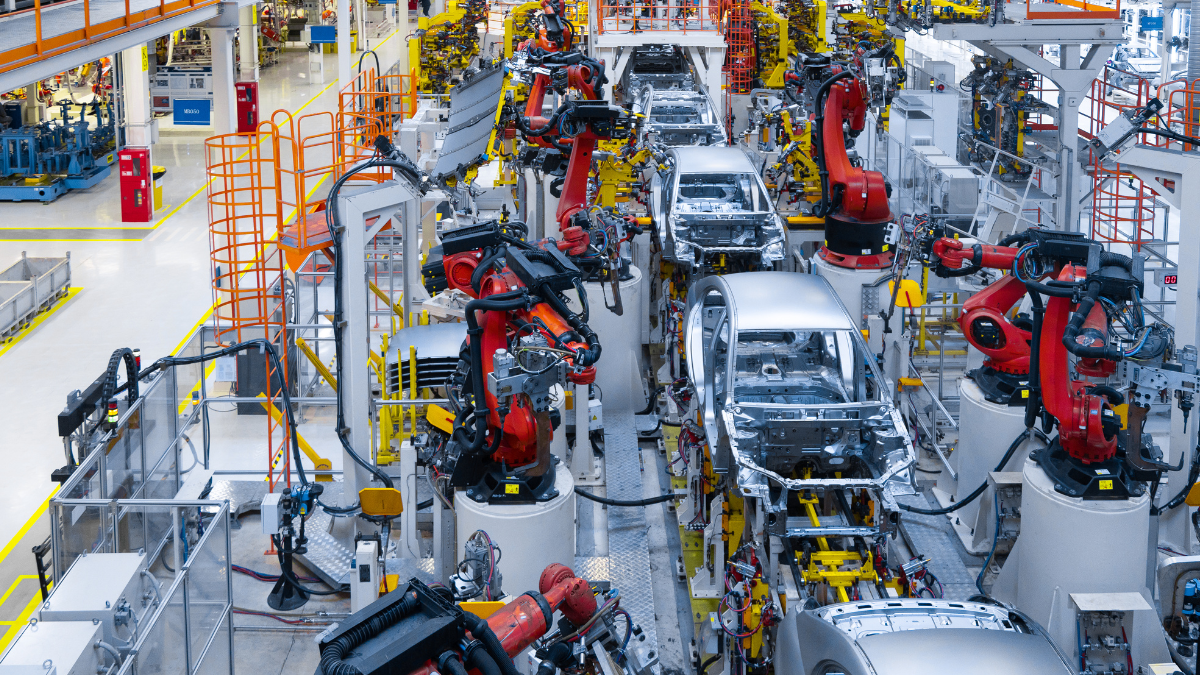
Automated assembly readiness focuses on shaping parts so they can be easily handled by robots or standardized end-effectors. For example:
- Broad, flat gripping surfaces, consistent edges, and predictable centers of gravity to help pick-and-place systems operate smoothly and reliably
- Clear access for robotic welding, fastening, or adhesive application
- Designs that nest or fixture cleanly for pallet-based systems
These considerations make it easier for manufacturers to scale from manual to semi- or fully automated lines as demand grows.
Next up is building a practical implementation roadmap that phases these practices into real projects and measures their impact on cost, quality, and lead time.
Tips for DFM Implementation
To turn DFM principles into everyday practices, teams need the right set of tools and approaches, including:
Cross-Functional Workshops
Bring engineering, quality, manufacturing, and supply-chain teams together early to agree on cost, lead-time, and risk targets for the product. Use these sessions to review concepts, surface manufacturability concerns, and clarify trade-offs between performance and cost. This shared understanding helps prevent late-stage conflicts and unplanned redesigns.
Digital Prototyping
Leverage simulations and DFMA tools to estimate cycle times, scrap risk, assembly difficulty, and cost drivers before cutting steel or placing POs. Digital studies help compare alternative materials, processes, and architectures quickly, so teams can converge on the most cost-effective design while options are still relatively flexible and cheap to change.
Pilot Builds
Run limited pilot builds to validate assumptions about throughput, yield, and assembly effort under realistic conditions. Capture issues such as difficult features, unclear work instructions, or supplier variability, then feed those lessons back into drawings, models, and standards before full-scale launch.
Design for Manufacturing: Your Cost Reduction Edge
Design for manufacturability and cost is a mindset that embeds efficiency into every product from day one. Teams applying these principles can eliminate costly redesigns, streamline assembly, and scale production without ballooning budgets. For expert tools, training, and step-by-step guidance to implement DFM across your organization, connect with Sigmetrix today.