
From Hardware to Software: How SDVs Are Reshaping the Future of Mobility
Bosch and ETAS leaders discuss the engineering, safety, and collaboration challenges driving the automotive industry's shift to software-defined vehicles at the GENERIS American Automotive Summit in Detroit.
Software-Defined Vehicles: Transforming Automotive Engineering Through Software, Collaboration, and Innovation
Source: Fireside Chat: How Software-Defined Vehicles are Transformingming Powertrain and Vehicle Architectures
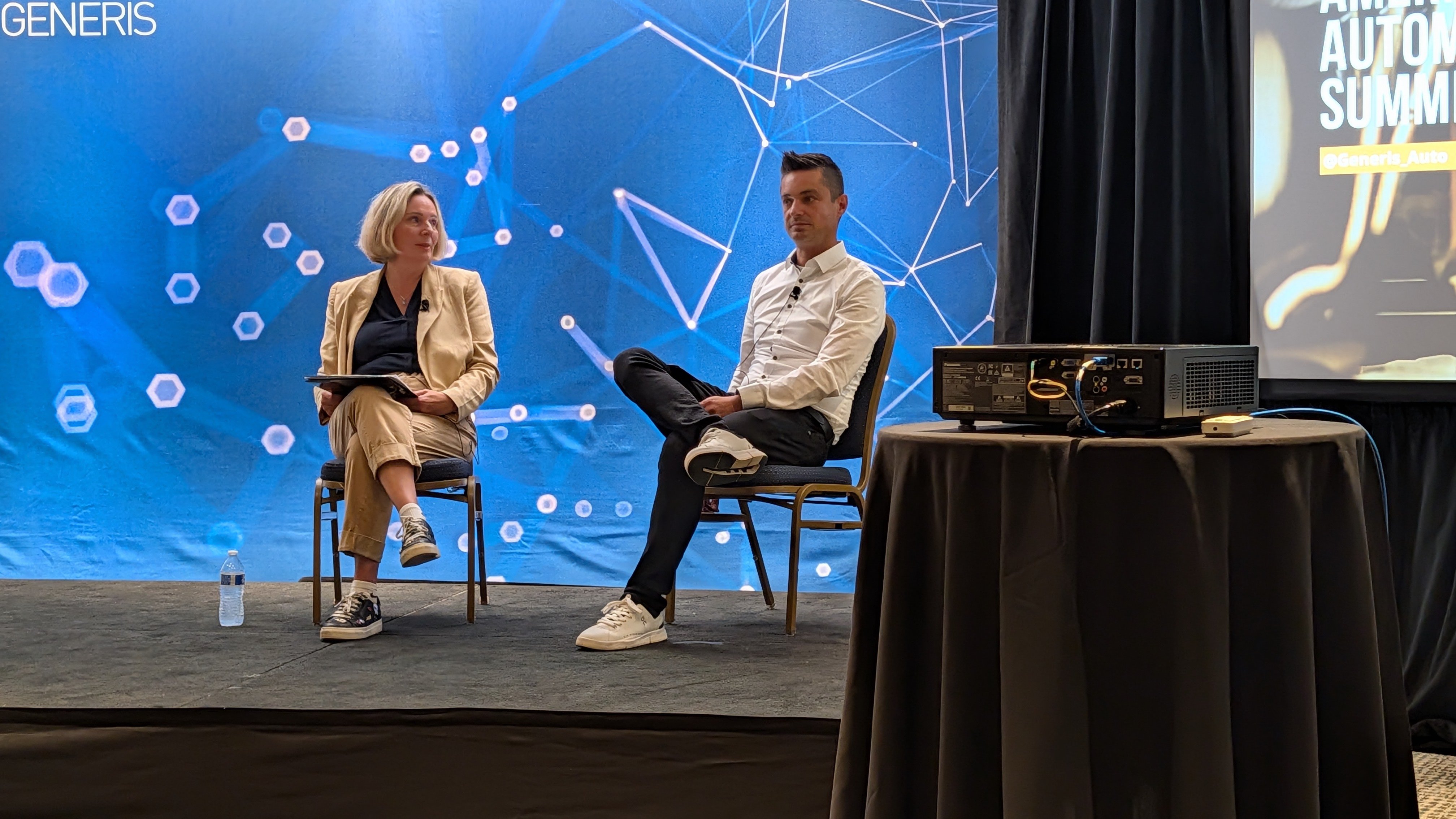
Speakers: Christine Thelesklaf, Bosch USA, and Bernd Graef, Bosch USA (ETAS)
At the 2026 GENERIS American Automotive Summit held at GM's Renaissance Center in Detroit, industry experts from Bosch and ETAS explored one of the most significant shifts underway in the automotive industry: the transition to Software-Defined Vehicles (SDVs). The discussion highlighted how automotive manufacturers are moving beyond traditional hardware-first development and embracing a software-centric approach that is reshaping vehicle engineering, business models, and supplier collaboration.
The speakers explained that a software-defined vehicle begins with software architecture and desired vehicle features rather than hardware design. Instead of developing hardware first and integrating software afterward, automakers are increasingly creating software platforms that can evolve independently from vehicle hardware. This decoupling allows manufacturers to deliver new features, updates, and improvements throughout a vehicle's lifecycle while accelerating time-to-market and enhancing flexibility.
However, the transition is far more complex than applying consumer electronics concepts to automobiles. Unlike smartphones, vehicles must meet strict real-time performance and safety requirements. Functions such as braking, propulsion control, and safety systems cannot tolerate delays or failures during software updates. The presenters emphasized that while over-the-air updates and cloud-connected services offer exciting opportunities, automotive software must always operate within the constraints of physics, reliability, and functional safety.
A major topic of discussion centered on vehicle architecture. Traditional luxury vehicles may contain nearly 180 electronic control units (ECUs), creating significant complexity. The industry is working toward more centralized and zonal architectures that reduce hardware redundancy while maintaining safety and real-time responsiveness. Determining which functions should remain close to physical actuators and which can be managed centrally remains one of the industry's most critical engineering challenges.
The session also addressed electrification and its impact on vehicle complexity. Contrary to the perception that electric vehicles are inherently simpler than internal combustion vehicles, the speakers argued that complexity has shifted rather than disappeared. Battery management, thermal systems, software integration, and connected services introduce new engineering challenges that require advanced software tools and development processes.
Beyond technology, the presenters stressed that SDV transformation requires a fundamental change in how automakers, suppliers, and software providers collaborate. Future success will depend on standardized software components, shared development environments, continuous integration practices, and more open partnerships across the automotive ecosystem. The evolution toward software-defined vehicles is therefore not simply a technology trend but an organizational and business transformation that will redefine how the industry develops, manufactures, and maintains vehicles for years to come.
Key Takeaway: The future of automotive innovation will be determined not only by advances in software and electrification, but by the industry's ability to integrate hardware, software, and collaboration into a unified development ecosystem. As SDVs become the new standard, organizations that successfully bridge engineering disciplines and supply-chain partnerships will be best positioned to deliver the next generation of mobility solutions.
Looking for More?
Find out how to leverage variation management to improve manufacturing quality