
Nordic MBE Forum 2026: Sigmetrix Discusses AI and MBD Adoption
Explore Nordic MBE Forum 2026, its agenda and workshops, and Ed Walsh’s Sigmetrix presentation on AI, MBD adoption, and mechanical variation management.
Manufacturing and inspection teams need product definitions that communicate functional requirements clearly. When dimensions and tolerances lack assembly context or omit downstream considerations, adopting model-based definition can leave important engineering decisions unresolved. Sigmetrix helps manufacturers address that gap through mechanical variation management.
The Nordic MBE Forum 2026 brings these implementation challenges into focus on October 7–8 at The Steam Hotel in Västerås, Sweden. Hosted by Ariadne Engineering AB, the second edition combines presentations, case studies, workshops, and opportunities to exchange practical experience.
For engineering, manufacturing, and quality leaders, the program connects enterprise-level adoption with the details that determine whether product information is usable. Sigmetrix’s Ed Walsh will spotlight how AI and rules-based engineering can support that work.
Key Takeaways: Nordic MBE Forum 2026
- The forum takes place October 7–8 in Västerås, Sweden, bringing together practitioners to discuss model-based engineering across the product lifecycle.
- Day 1 emphasizes MBD adoption, standards, and engineering transformation, providing context for evaluating organizational readiness and practical implementation challenges.
- Day 2 focuses on digital manufacturing, quality, and enterprise integration, connecting product definition with downstream use and feedback.
- Sigmetrix President Ed Walsh will discuss combining AI with rules-based engineering, stakeholder perspectives, and assembly context to support MBD adoption.
- Published workshop themes include smart CAD workflows, QIF, MBD characteristics, ASME standards updates, and TRIZ, with selections made during registration.
Nordic MBE Forum: Connecting Engineering and Manufacturing
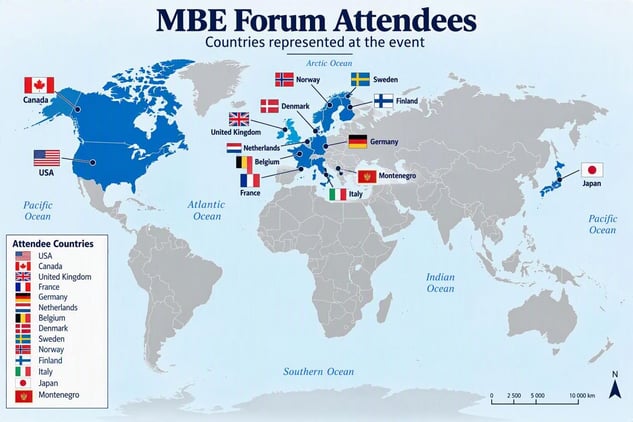
The Nordic MBE Forum examines how model-based product information supports work across engineering, manufacturing, quality, and the supply chain. Its international program combines strategic discussions with technical application, and all presentations and sessions will be delivered in English.
For your organization, the relevant question is how product definition supports the decisions each function must make. A successful MBD implementation needs accurate dimensional controls, clear associations with model geometry, and information that downstream teams can interpret and reuse.
The forum’s presentation lineup addresses those connections through adoption experiences, digital-thread methods, manufacturing applications, and inspection workflows. Together, these topics provide a useful framework for evaluating your own implementation priorities.
Day 1: MBD Adoption, Standards, and Engineering Transformation
Day 1 is organized around MBD adoption, standards, and engineering transformation. These themes address the transition from having model-based technology to establishing consistent practices across the people and processes that consume product information.
Relevant presentations in the published lineup include David Hook of Rolls-Royce on digital-thread experience and supply chain readiness, and Fredrik Montelius of Hitachi Energy on moving from pilot projects toward broader model-based deployment. Dennys Gomes of Vestas will discuss CAD methodologies, design governance, and onboarding engineers and suppliers.
As you evaluate these adoption experiences, consider your own MBD adoption challenges: role-specific skills, supplier readiness, interoperability, and workflow integration. The program offers opportunities to connect organizational questions with concrete engineering practices.
Day 2: Digital Manufacturing, Quality, and Enterprise Integration
Day 2 focuses on digital manufacturing, model-based quality, and the future of MBE. The emphasis shifts toward how product requirements remain useful as they move through manufacturing and inspection.
The published presentation lineup includes Luca Sala of Sandvik on connecting CAD, CAM, machining, and inspection; Simon Heroux of InnovMetric on linking MBD requirements with measurement data; and Ercihan Kiraci of the University of Warwick on protecting inspection-data integrity. These examples illustrate the broader program’s downstream focus.
For your team, these discussions connect to digital variation management: understanding how design requirements, manufacturing variation, and quality feedback inform one another. Review the organizer’s schedule for individual session placement, as the agenda remains preliminary.
Spotlight: Ed Walsh on AI-Supported Mechanical Variation Management
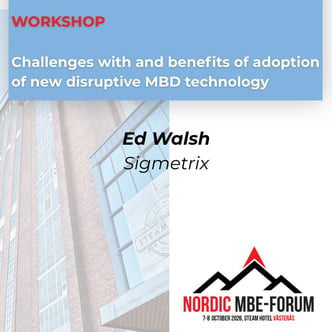
 Ed Walsh will present Sigmetrix’s approach to AI-supported MBD adoption on Day 1, October 7, from 14:35 to 15:05. Walsh is President of Sigmetrix, bringing experience in dimensional management and robust engineering practices to the discussion.
The session, “How a smart approach to AI can help companies overcome Challenges to MBD Adoption for Mechanical Variation Management,” will examine why adoption barriers persist even when technology is available. Its central focus is the combination of AI and rules-based engineering, rather than dependence on AI alone.
The session description emphasizes two priorities: representing downstream stakeholder perspectives during design and considering parts within their system or assembly context. These priorities connect AI-supported guidance to usable engineering information, rather than presenting AI as a substitute for engineering judgment.
Bringing Manufacturing, Quality, and Inspection Perspectives into Design
Walsh’s presentation will explore how AI can take on manufacturing, quality, and inspection perspectives to guide design engineers through relevant questions and decisions. Each function needs product information that supports its own tasks while preserving design intent.
For your design reviews, that creates a practical discussion point: which downstream requirements should be considered before dimensions and tolerances are finalized? Connecting those requirements to usable PMI helps establish a clearer basis for manufacturing and inspection decisions.
Defining Dimensions and Tolerances in Assembly Context
Walsh will also address why dimensions and tolerances should reflect the system or assembly in which a part functions. Evaluating an individual feature without its functional relationships can miss the accumulated effects of variation across an assembly.
That principle is central to tolerance analysis, which evaluates how dimensional variation affects fit and performance. For your engineering team, assembly context provides a basis for assessing which controls matter to functional requirements and manufacturing cost.
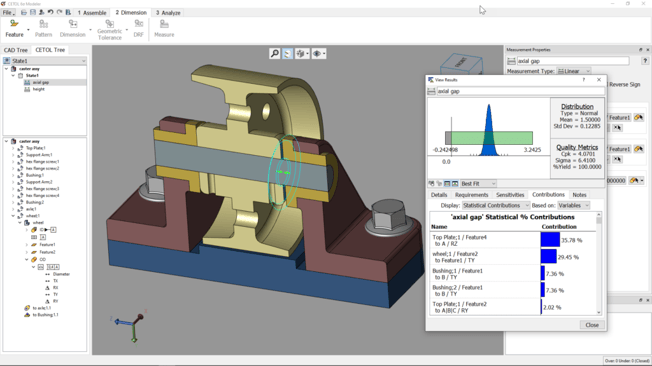
Sigmetrix’s CETOL 6σ supports CAD-integrated mechanical variation analysis and tolerance optimization. This established capability provides relevant background for the session’s engineering focus; the presentation description does not establish a specific AI product release or demonstration.
Workshops and Practical Learning Opportunities
The published workshop themes include smart CAD workflows, the QIF standard, MBD characteristics, ASME standards updates, and TRIZ. These topics complement the presentation program by providing opportunities to work through application details.
Workshop selection takes place during registration, and some sessions run in parallel. Choose sessions based on the decisions your team needs to improve, such as structuring product characteristics, exchanging quality information, or applying standards consistently.
For ongoing capability development, Sigmetrix’s GD&T training helps engineers understand the manufacturing, inspection, and assembly implications of dimensioning and tolerancing. That shared understanding supports practical use of model-based information beyond a single conference session.
Preparing for More Effective MBD Adoption
Prepare for the Nordic MBE Forum by identifying the handoffs where your product information requires clarification or additional interpretation. Use those examples to focus conversations with presenters and compare implementation approaches against your own operating requirements.
Bring three priorities: a representative part or assembly, a downstream workflow that needs improvement, and a measurable adoption objective. Discuss how functional tolerancing, stakeholder involvement, and engineering validation can address those priorities before expanding the approach.
Review Ariadne Engineering AB’s preliminary agenda for the latest schedule and workshop information. Ed Walsh’s session offers a focused opportunity to explore how AI-supported guidance and rules-based engineering can help make MBD information more meaningful across the product lifecycle.
FAQs About Nordic MBE Forum 2026
When and where is Nordic MBE Forum 2026?
The Nordic MBE Forum takes place October 7–8, 2026, at The Steam Hotel in Västerås, Sweden. Ariadne Engineering AB hosts the event, which includes presentations, workshops, and networking focused on practical MBD and model-based enterprise implementation.
When is Ed Walsh’s Sigmetrix presentation?
Ed Walsh’s Sigmetrix presentation is scheduled for Day 1, October 7, from 14:35 to 15:05 local. The session will explore AI combined with rules-based engineering, downstream stakeholder perspectives, and assembly-context dimensioning and tolerancing.
What will Sigmetrix discuss about AI and MBD adoption?
Sigmetrix’s session will examine how AI and rules-based engineering can work together to address MBD adoption barriers. The focus includes guiding design decisions through manufacturing, quality, and inspection perspectives while preserving the system context needed for useful dimensional requirements.
How does Sigmetrix support mechanical variation management?
Sigmetrix supports mechanical variation management through tolerance analysis software, GD&T training, and consulting. These capabilities help your team evaluate dimensional requirements, understand assembly variation, and balance product quality with manufacturing cost while developing shared engineering knowledge.
Learn more at Sigmetrix's upcoming webinar